
Interview with Masters’ Student, Anna Dwyer
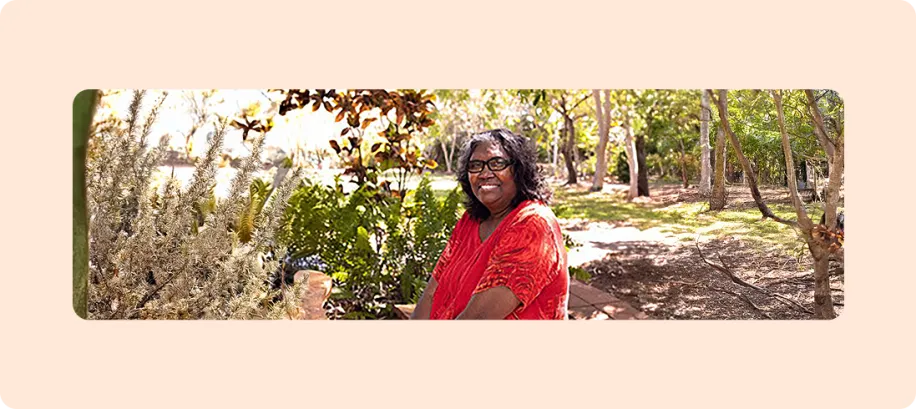
Hello Anna, thank you for agreeing to be interviewed for the Australian Journal of Community Work’s “From the Study Desk” section. Can you please start by telling us about yourself, growing up in remote Western Australia?
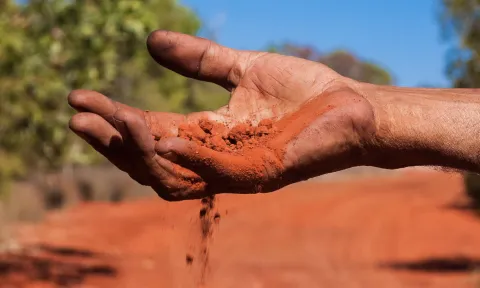
Firstly, I would like to say that I am a person who come from ground roots up to where I am sitting today. My name is Anna Dwyer and I’m a Karajarri woman and Traditional Owner from the Bidyadanga Aboriginal Community on Karajarri Country – which is about 190 kms south of Broome in the Kimberley region of Western Australia. I was born in Broome, however in the early days of Bidyadanga the health clinic was not available at the time and so then Mum, like all the other mums, had to move to Broome on Yawuru Country, to have their babies. People from Country/communities across the region had their own little camps especially around Broome.
The Anne Street Reserve started around the 1960’s and 70’s and I have spent a lot of my childhood at this place. Like many others our family lived in a little house made of corrugated iron we call it ‘the Shack’ and in this shack it had a couple of rooms, an outdoor ablution block of 6 that catered for the 12 houses, 6 on each side. We had no stove in the houses to cook our food on and so a lot of the time and for many of us including my mother would cook the meals outside in our own bush kitchen. When my mother cooks the meals you can smell the aroma in the air especially the cooked fish, turtle and rice. This food involved a lot of food sharing between all of us and if we had plenty leftovers then it would be shared to the other families at the reserve.
Many who lived at the reserve have memories of their own and still talk about their stories, songs and friendships today. Personally, I can remember it created a feeling of peace and happiness – despite the poverty. Even though we came from different communities and language groups, it was what it is called a communal living today, and it worked well for most of us.
So, what was it like for you when you lived there Anna?
I loved my childhood and as a kid I enjoyed playing with all the others, getting into mischief, having lots of extended family and friends around me especially my siblings and cousins. We shared anything we had, built cubbies in broken cars and probably drove the adults mad! I guess that’s where I started listening and hearing other Aboriginal languages spoken within the community which gave me an opportunity to understand and pick up a few different language words. In my early childhood of schooling, I did kindy and primary school, however that school has now disappeared, then I did my year 6 and 7 in a school called St Marys near the old Catholic Church in Broome, which has also disappeared as well.
However, as the years went on, I extended my schooling in year 8, 9, and 10 at the old Broome District High School. I then went on to Pundulmurra TAFE College in South Headland in the Pilbara region, about 600 kms away, but ‘only’ 440 km south of Bidyadanga. I did a ‘general’ education course there. As a 16-year-old I was very shy and very humble, which continued into much of my adult life (but not now!).
When I look back and think about my past life, I realise there was no such thing as career advice, no mentors, information, or encouragement to explore employment options or progress to considering future opportunities. So - I just did what I always did best, created my own pathway, and slowly but surely got to where I am today.
What was next then – into the workforce?
Later in life, I worked in many organisations throughout the Kimberley and remote communities where I have learnt new skills, I would take on huge responsibilities, engage with people and mostly build on my own confidence. As the years went by, I knew I had many obligations to my immediate families and community, where I have found I was called upon to help Aboriginal people who did not have very good English language, with whatever spoken and/or with written information that was required. You need to understand many remote community members have 3 or 4 languages, with English being their last. So, I became the ‘go between person’ – feeling a strong sense of belonging and holding the community together with the people that I was supporting.
This journey has grown in me, and this is where I had a sense of family, both immediate and extended, which has, and will always be, very important to me of course. So, for my immediate family from my mother, she was the Matriarch of 5 generations and therefore I come from a huge family 5 times a football team. In 2020 my mother has passed away and I think about her a lot, she was a great loss. However, I will always acknowledge her as my guardian Angel a nurturer as a mother, she didn’t drink nor smoke, and she was a woman with high status around the Karajarri traditional lore. Importantly, she spoke her own language fluently, and her leadership was very strong, specially related to traditional ceremonies, culture and understanding of her country. My mother was a natural cultural educator and a ‘role model’ – her caring and sharing ways of sharing her experiences, became the same with me.
My father was a great man who also passed away 20 years ago. He too was my inspiration, through his firsthand experience by understanding the true Karajarri lore, country and culture. I can remember at the age of 8 years old my father told me that “one day I am going to be a big person”, well I can understand this now. I was, and am, called upon to help people where I can, even for when I am at work – nothing’s changed much even today – I just juggle work, children/grandchildren, and my fellow Countryman. I suppose all those experiences I carry are under the banner of respecting people and appreciating life.
A message to all, “My pathway was certainly different than most – ‘I did it my way’ comes to mind for me. If people are serious about research or interested to find out more, I suggest they find others who can mentor them through many of the processes that appear to be a maize at the beginning. There’s no rush – JUST DO IT” Anna Dwyer.
Interview by Dr Anne Jennings, AJCW Editor, 2024.
Anna, you’re sitting here now as an accomplished Aboriginal researcher and doing your Masters’ degree – how did that come about?
I guess thinking about a ‘pathway’ for me which really triggered me, is where I felt I should do a master’s degree by research through the University of Notre Dame based in Broome. My background is that of a linguist, where I work with language all the time and I am registered as a Karajarri Interpreter through the Kimberley interpreting service in Broome. However, I have found that I was doing more and more translating and supporting people who did not have strong English nor have an understanding around Western way of thinking and working. This has led me to realise how different those western processes are to how we operate! I felt, I needed more, so undertook, and succeeded in being awarded, an Advanced Diploma of Australian Languages and Linguistic Studies at the Bachelor Institute of Indigenous Tertiary Education at Bachelor in the Northern Territory. This course took me all the way to the Torres Straits, living and studying at a place called Thursday Island, gaining expanded knowledge to complete my language work.
Then over 14 years I undertook several roles for the regional Kimberley Land Council, organising and facilitating community meetings, as well working together with the traditional owners throughout the Kimberley, and most importantly undertaking community work. In 2008, I gained a position in the Nulungu Research Institute of the University of Notre Dame Australia, Broome Campus. I started with administrative work and eventually worked my way up by to becoming an early career researcher. Today my position title me as Research Fellow and Associate Lecture. Not only do I undertake my own research I also collaborate closely with my fellow colleagues on many projects that benefit the Kimberley. In the beginning of my career I felt I had no skills however I had some great mentors, both female and male, Aboriginal and non-Aboriginal, who encouraged and sort of pressed me to firstly believe in myself, as well as passing on much needed skills for this role.
In my other role outside of my work, I was appointed as a Director for the Karajarri Wanjira and Nangkariny Foundation and the Karajarri Traditional Lands Association. These positions usually take up to 2 years then someone else is voted in, however I have continued to represent my people while continuing undertaking Nulungu Research on issues of Law/lore and Culture, Health, Energy Usage and Climate Change.
Sounds like you’ve found your place in life Anna – home, community, and profession.
I supposed so, I guess this is what I am good at. However, through my own personal reflection I know my research work is very important to me, and more so for the people that I am researching for, because I would like to see more changes and make a difference for many communities. I can tell you - my work is a lifetime experience of what I’ve always known best and achieved.
However, I really hadn’t fully understood the value within Western society puts on university and publications, and I have continued doing what I could to create opportunities for my fellow Karajarri families and other Aboriginal people across the region. As a Karajarri woman and a Research Fellow, I am in a fortunate position of having an equal voice with other researchers, in relation to choosing my own research themes and subjects. Over time I have researched, published in journals, and presented in many conferences around Australia. For me, as a grassroots woman, I have worked really hard throughout my life - finding my path by ‘climbing many mountains’. My Google Scholar profile H-index is 10, including 268 citations since 2019 from 37 publications and presentations I have led or contributed to.
In addition, I have other roles within the University of Notre Dame in Broome, where I have additional duties to undertaken and accomplish. This includes developing and delivering guest lectures to Diploma of Nursing students on Cultural security and sensitivity when caring for Aboriginal patients. Other students from different universities enrol in Aboriginal Studies courses here and they are always interested to learn about subjects around Land and Caring for Country programs and other topics that are relevant to understand about Indigenous issues. Moving forward the acknowledgement I have received includes being awarded the university’s Vice Chancellors ‘Award for Initiative that Enhance Student Learning’. I can tell you that really surprised me! On top of that I felt really humbled when I received special recognition of my research and community work by being granted the Kullarri NAIDOC Award for PERSON OF THE YEAR, 2018, This achievement was for my contributions to Aboriginal research and education through the Nulungu Research Institute. This made me feel very proud.
Even with these experiences, I would say that I have continued to feel that I didn’t do an adequate amount of work, because I felt I should be doing more for myself and specifically in a university level. This is a challenge for me and writing papers culturally and academically is a unique skill that I have taken on by writing for journals. Even so researching your own stories are usually required from researchers – even with all my work and the recognition of my Aboriginal knowledge and language skills, left me feeling “I don’t think I’m good enough!” That was, however, until my Director, Co-workers and others within the university support team helped me apply for – no, not entrance to a bachelor’s degree – but straight into a master’s degree – and I was accepted! WOW! I still can’t believe it – they valued what I value – Aboriginal knowledge that is used to support social and ecological change, mainly using qualitative research methodology. So now I’m into it – researching!
That is fantastic Anna – so what would you say to anyone who is interested in tertiary studies, and possibly undertaking research, who doesn’t think ‘they’re smart enough’?
As mentioned before, I am no longer a shy person, but I continue feeling humbled – so I have turned this into encouraging and supporting my family members, friends and anyone who are interested about studying in a university or even to encourage those to find employment here at the Broome Campus. Personally, I say a big “YES” to those interested, asking them to forget about the ways education was gained in schools. I firmly believe tertiary education and research work will teach them ways to learn first, then understanding ways of doing and learning can move on to being open to high level of education within their chosen field and courses.
A message to all, “My pathway was certainly different than most – ‘I did it my way’ comes to mind for me. If people are serious about research or interested to find out more, I suggest they find others who can mentor them through many of the processes that appear to be a maize at the beginning. There’s no rush – JUST DO IT” Anna Dwyer.
Interview by Dr Anne Jennings, AJCW Editor, 2024.

About Community Work Australia
From setting educational standards through to determining an ethical practice framework, we support community workers in every sphere of their work life.
Set up over 50 years ago, we exist to ensure that the community benefits from an ethical and well-qualified community work labour force.